




Client
Rethink (Smiles e Abastece-ai)
Project
Team structuring
Description
Structuring UX Design teams to optimize deliveries, reduce costs, and support a collaborative Design System.
Service
Design Ops, Design Leadership


Restructuring Request
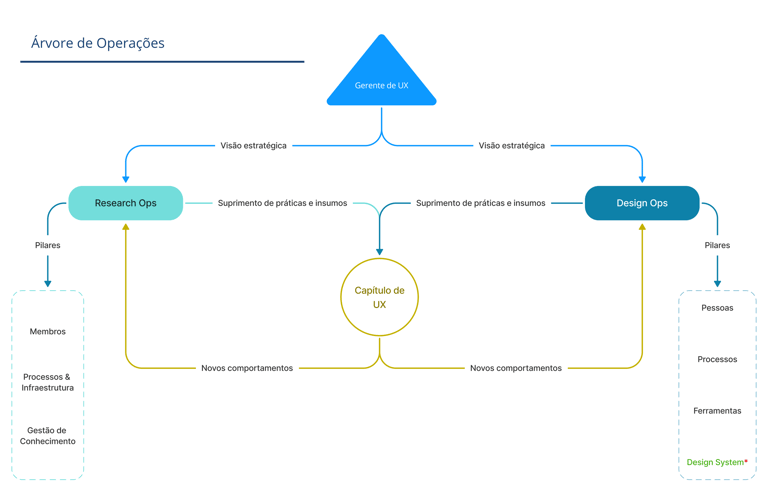
Between 2022 and 2023, Design managers requested a structuring in the UX Chapter, of ways to operationalize Design with Design Ops and Research Ops, in order to deliver better Design results, in order to positively impact the company's results.



DEFININDO O ESCOPO


As an initial part of the proposed challenge, we brought together a Designer, a Researcher, and the UX Managers and defined some fundamental questions as a starting point.
How do we work together?
How do we complete the work?
How do we collaborate with other departments?
How do we create impact with our deliverables?
To answer each question, we used: 1:1 interviews, prototype analysis, team metrics analysis, and shadowing. For each question, we were able to identify the problems to be solved, create proposals for possible improvements, and estimate valuable results aligned with the company.
We also agreed with management that, to avoid negative impacts, each improvement would be implemented every 30 days for testing and validation, comparing data every two sprints.
How do we work together?
The problem
Requests entered the backlog and were directed to a single available designer, without any context for the project or challenge. To make matters worse, the team had no way to share experiences or even clarify doubts.
The proposal
We agreed on the following improvements:
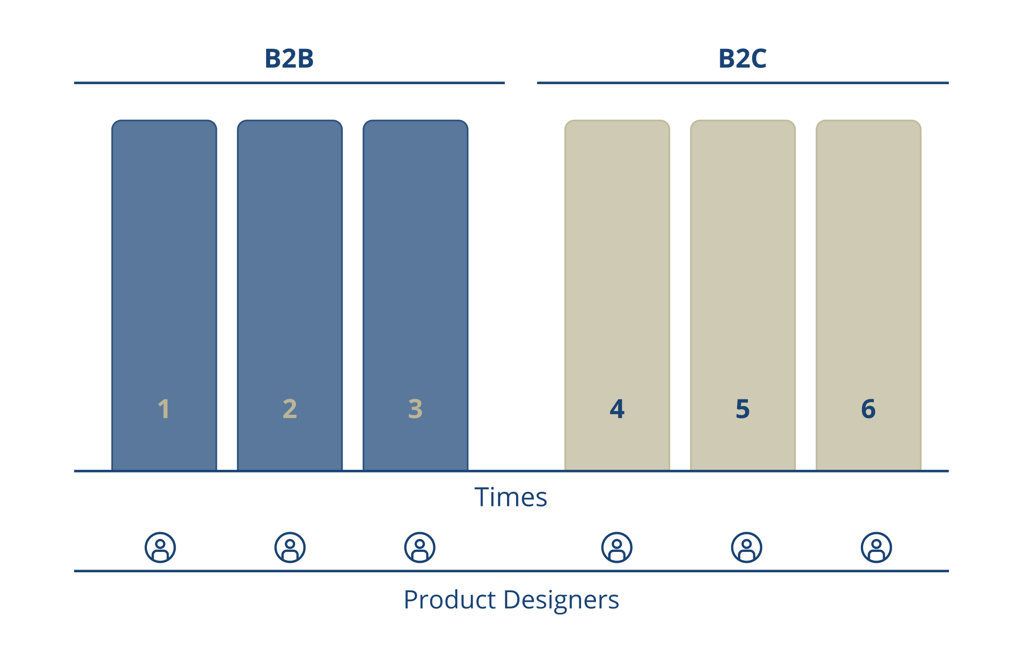
Separate into two business units: B2B and B2C, following the same model as the product team;
Assign designers to the six teams, three for B2B and three for B2C;
Initially create a weekly meeting to synchronize work;
Introduce a monthly retrospective.
The result
Designers are expected to have a better understanding of business units and greater immersion in team challenges, in a professional allocation format.
Como finalizamos o trabalho ?
We seek to understand and evaluate the quality of the artifacts delivered by the UX team and the tools used during the workday. We evaluate three (3) points:
Types of tools being used;
How prototypes are organized;
The handoff to the Development team is being made.
The answers
Figjam (Whiteboards), Figma (Prototype), Maze (User Testing), Microsoft Teams (Communication), and Jira (Demand Management);
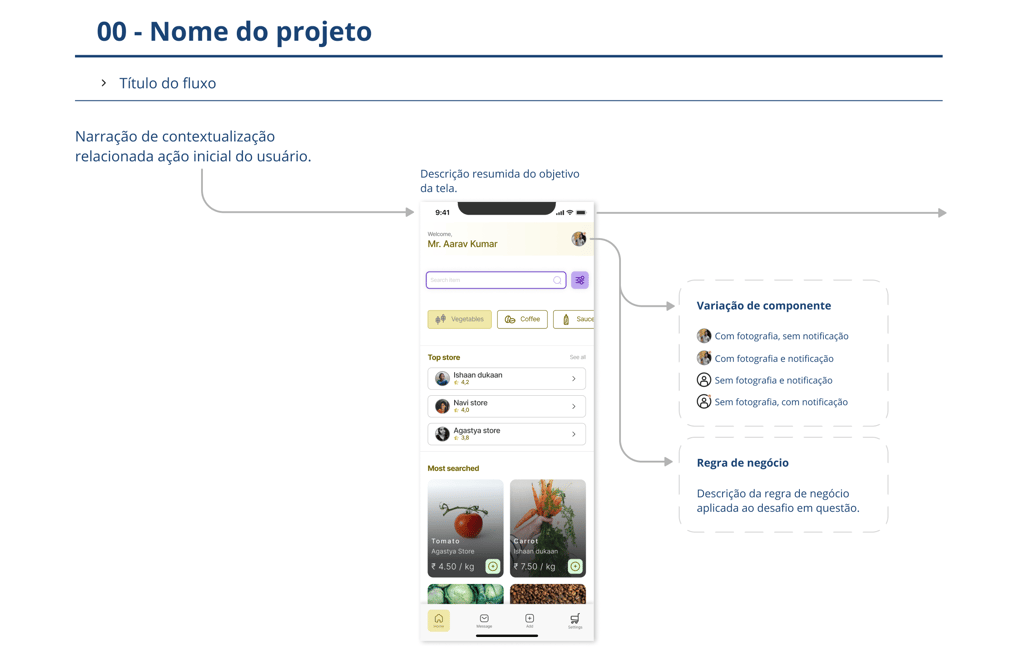
The screens were placed side by side without component variation or behavioral indication, as well as a lack of direction for applying the business rule;
The team presented the screens, and throughout development, the team held meetings to address questions.
The proposal
Segregate projects by team in Figma, identify project status, and standardize high-quality wireflow globally.

How do we create impact with our deliveries?
The UX team's proficiency was leaving the engineering team with rework. As a result, solution delivery was taking longer than usual for a digital product team, were about 45 days to deliver a single solution.
The proposal
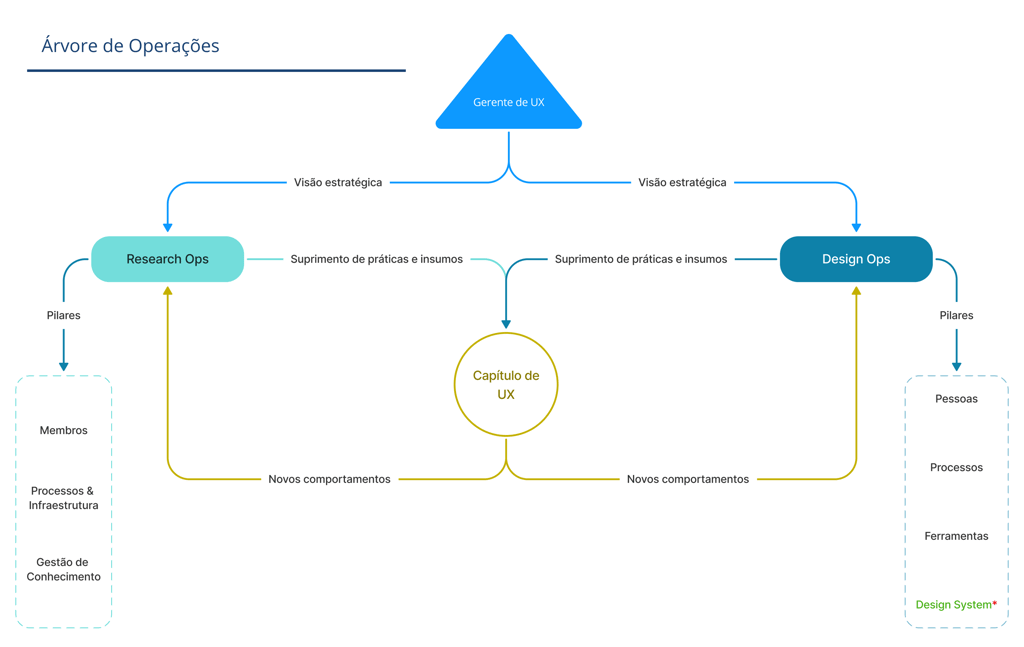
Define a tree of operations pillars;
Create consumable inputs for team development;
Learning challenges for designers and researchers;
Immersion into the technologies used in the product.
The result
We've managed to reduce the UX team's cycle time. We understand that employees are honing their skills as a team through playbooks and mentoring. Likewise, understanding the technologies involved in projects helps define and refine ideas to propose tangible solutions and capture a continuous learning cycle.
Conclusion
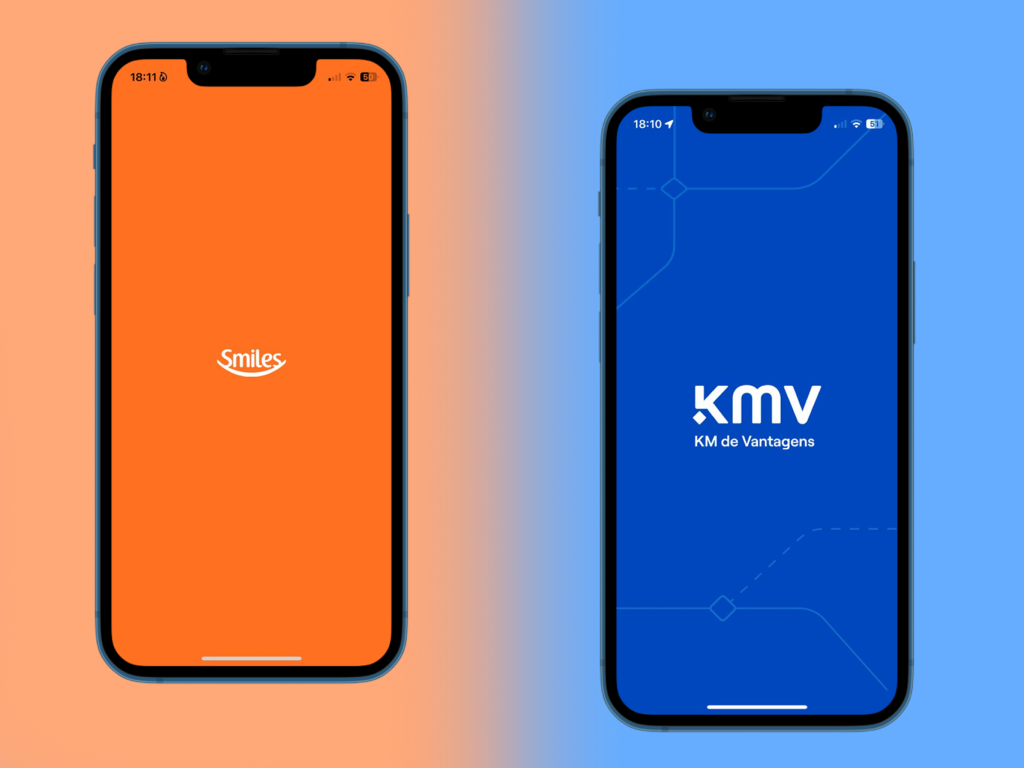
In both clients, the same methodologies were applied to learn about the culture of each environment and, as a consequence, observe the tendencies of both teams and adjust the method to allow the team to deliver the best Design.




© 2025 Neves Design, LTDA.